Tuesday, 23 February 2016

Barcelona Testing Roundup - Day 1 and 2


Who will come out on top?


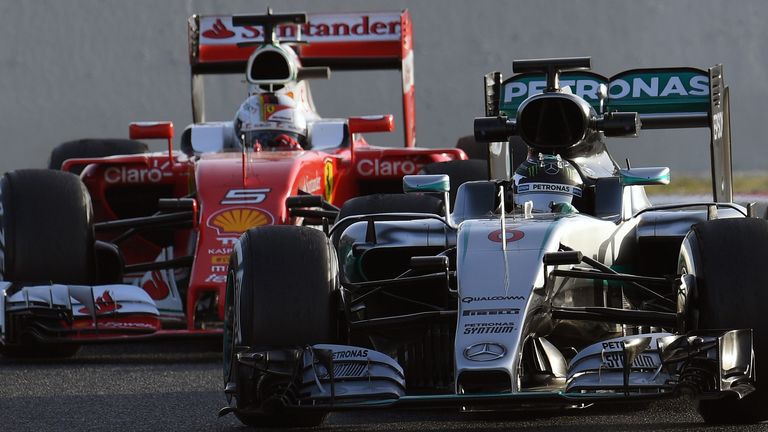
A wintry Monday morning welcomed the start of preseason testing at the Circuit de Catalunya. Not regarded as an exciting race venue the track is more synonymous for being an ideal  'test' circuit, thanks to its high speed flowing nature. Long corners allow engineers to see how their aerodynamics are performing, with cars often sprouting strange metal frames and 'blisters' for accurate measurements. Countless hours over the winter of computer simulations and wind tunnel work don't always translate to the real world. There are other fundamentals such as mechanical grip, engine performance, car set up and tyre performance. Its not a task that a lot of drivers relish, especially when they get lumped with a myriad of mundane tasks, like testing radios or a 100+lap run. The importance of getting a measure of your car, ironing out potential problems and putting in a good amount of laps is paramount. Here is a brief look at each team's progress over the first two days.

Mercedes

Too good to beat?


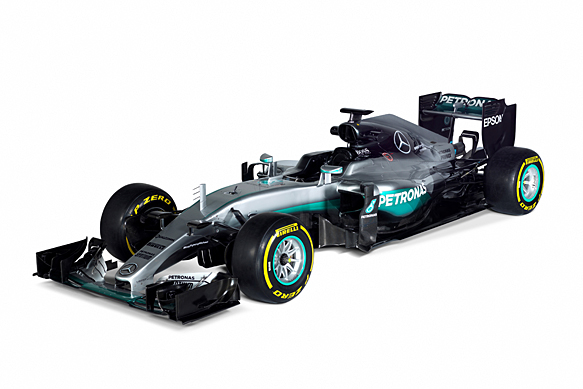
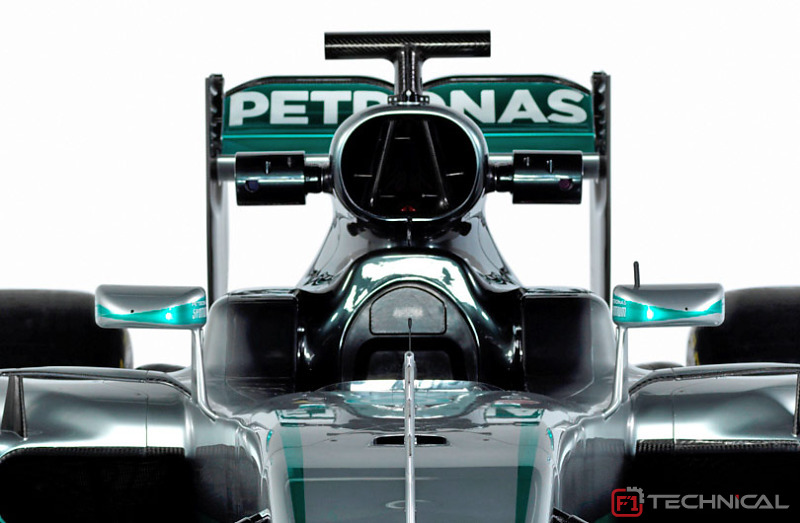
After another dominant display in 2016 Mercedes had solid ground on which to build their new challenger, the W07. ''#WeAreW07' was the mantra on twitter as the covers came off on Monday morning. Pictures released the day before showed a visually striking new airbox, perhaps the team enjoying the freedom to experiment in light of their advantage.

Mercedes barge boards
Hamilton achieved a mammoth 156 laps on day one, considerably more than next best Ricciardo's 87. Attaining high mileage straight out the blocks proved reliability and allow the team to begin experimenting with parts. As Rosberg emerged from the pits on Tuesday morning his car sported some interesting sculpted barge boards. Directing air towards the rear of the car as a conventional barge board does, the serrated edges allow portions of air to bleed through to reduce drag. A striking design very similar to boards tested by Lotus in 2013.

Hamilton was able to post a respectable 1.25.409 on day one and end second fastest. Rosberg ended the following day 2 seconds adrift of Vettel in 4th, but importantly achieved on medium tyres compared to the ultra soft compound of his compatriot's Ferrari. Mercedes is clearly not demonstrating its true pace at present but its certainly looking ideal so far for the Brackley outfit.

McLaren

The new McLaren MP4-31 is hoping to avoid the disaster last year
The big question mark hung over McLaren and specifically Honda. Would the engine be more powerful and above all reliable? Last year's opening day of testing saw Fernando Alonso complete just 6 laps which set a precedent for their disastrous season. After the debacle its become quite clear that Fernando Alonso will not stomach a similar year. Tuesday came the announcement that Honda boss Yasuhisa Arai would be forced into retirement. The strange timing opened up speculation that this year's engine could be another dud. Arai however was quick to explain that it is Honda's policy to automatically retire employees at 60 and he would aid a transitional period for new boss Yusuke Hasegawa.

Thankfully Jenson Button put in a solid 84 lap stint on day one which was more than achieved in the whole 5 days last year. Last season's achilles heal seemed to be the engine's deployment of harvested energy, robbing the car of around 150hp at the end of the straights. However Jenson seemed confident this has been ironed out. "The deployment is so much better. I don't know if it is the same as the other guys have but it feels like it is. That is a big step for us. It is much better, very easy to understand the deployment and to play with it and it listens to change which is good. It is good to see all the hard work over the winter has paid off."

Another trouble free run for the team today ended with Alonso racking up 119 laps. Although over 3 seconds adrift of Vettel's fastest time its clear the team are focusing on achieving much needed reliability.

Ferrari
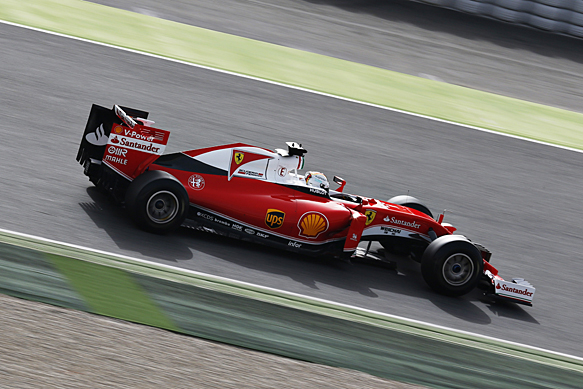
Vettel topped the time sheets but will it be enough?

The Marenello squad were as secretive as ever, with team branded boards concealing their garage entrance.Vettel ended both days on top of the time sheets, opting to run in the car consecutively before teammate Raikonnen takes the helm on tomorrow. Monday saw him 0.470 seconds clear of Hamilton on medium tyres. His 69 laps were however completely dwarfed by the Mercedes driver's 156. It is common knowledge that Vettel is obsessed with fastest laps so we can't look into this pace too much at present. However with much hype over this year's car Ferrari fans will be hoping this pace is genuine and upheld when Mercedes start to show their hand.

 "The car is a step forward, it was the first proper day and it was good to get some laps and a first feel for the car. The first impression was very positive. It's better to be first in one month's time. It's better than being last but it's not really important." - Vettel

Tuesday saw the team swapping from mediums, super-softs and then ultra-softs to then post the fastest time 1.22.810. A longer run in the afternoon saw Vettel chalking up 126 laps before before pulling off track 5 minutes before the end of the session and bringing out the red flag.

Williams
A few niggles kept the new FW38 in the garage for a period of time before it was able to complete a run of 80 laps and set the 4th fastest time. Valtteri Bottas wanted to make it clear that the team was "not focusing on performance yet" as it wanted to tick the boxes of reliability and understand the car's aerodynamics. The team is hoping to claw back ground lost to Ferrari this year and the signals coming from the red garage suggest this could be difficult.

Bottas was back in the seat on Tuesday with a solid run of 134 laps. He will pass the baton to Felipe Massa for tomorrow's running.

Red Bull

With their striking matt coloured paint scheme, Red Bull were hoping their 2016 challenger was going to go as well as it looked. With the engine contract not signed until the eleventh hour completion of the RB12 was delayed. It will be of some consolation that Daniel Riccardo finished both days in the top three with relatively trouble free running.

After a steady 85 laps on Monday, Riccardo described his Renault engine (re badged as sponsor 'Tag') as "the same as last year" and apparently  that "isn't a bad thing, I think on day one it's a lot better platform to work from than what we had this time last year.
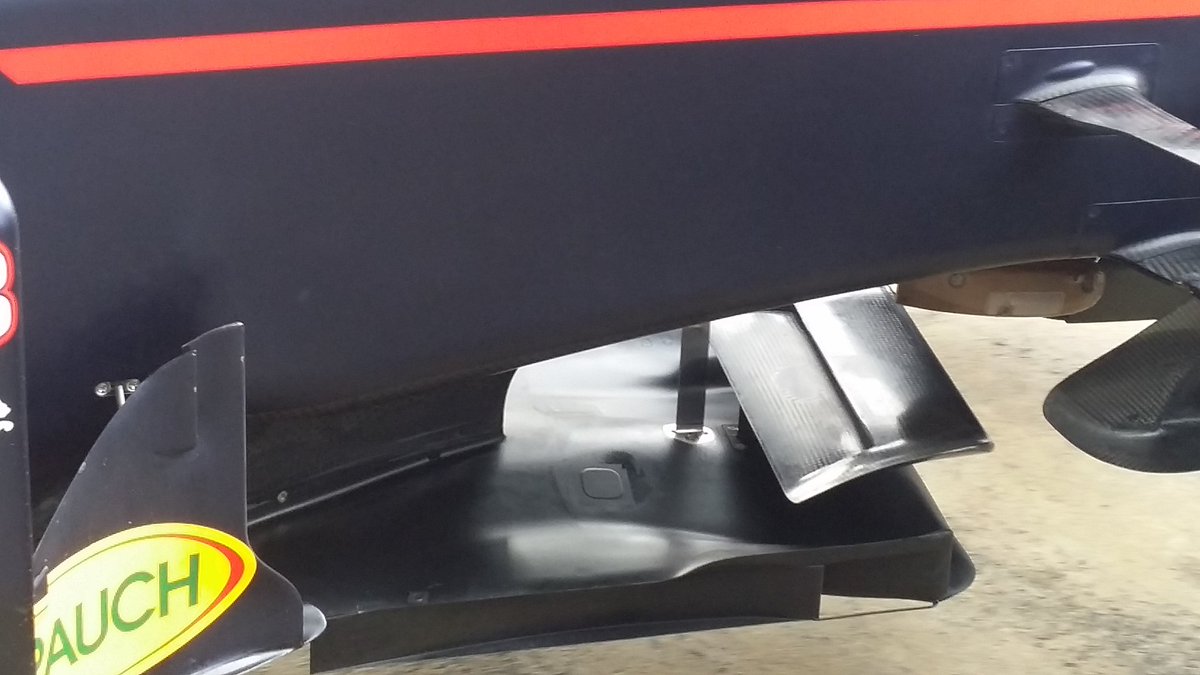
Red Bull floor detail
            There wasn't any whiplash or anything like this... but I'm a bit happier and it's a good start, it's probably all we can ask for, for now."

One can only think as 'whiplash' a term to describe the once poor drive ability of the Renault engine. While the car might not be suitable for fraudulent insurance claims it certainly has some interesting aerodynamic details. A front splitter sprouted out above the front of the floor caught the eye of ScarbsF1.

Force India


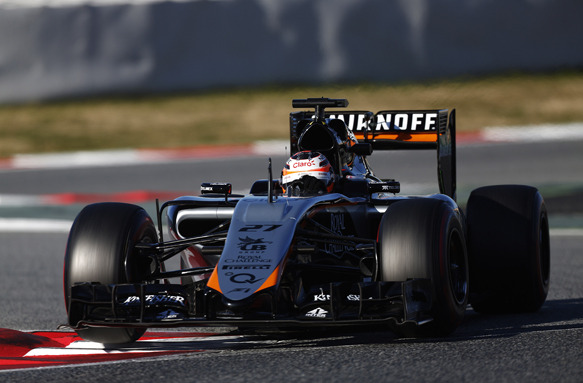
The Silverstone based team launched their VJM09 on Monday just half an hour before testing began. Technical Director Andrew Green was quick to point out the fact that "with the regulations likely to change for 2017, it didn’t really seem like an efficient use of our resources to start from scratch on a project that would have such a limited lifetime.”

Though the VJM08 B spec car of last year may have had reasonable pace, this statement does seem like a potential cop out, suggesting a stepping stone to their 2017 effort. This could be risky with rivals Toro Rosso getting their hands on Ferrari power this year. Development driver Alfonso Celis debuted the car on Monday and clocked and lap time of 1.26.298 on the soft compound, just 1.359 shy of Vettel's fastest lap. Perez further cut the gap down to the Ferrari to 0.840 seconds and notched 101 laps.

Sauber

Sauber were not able to prepare their new car in time for Barcelona testing, so ran their 2015 C34. Although data will still be gained this is a wasted opportunity to get some much needed track time. Swede Ericsson ended his days 8th and 5th in the time sheets. We look forward to seeing the new car on track next week.

Renault

Jolyon Palmer's Renault debut got off to a shaky start on Monday with the new RS16 suffering from software problems. The day ended with 37 laps on the board and languishing at the bottom of the time sheets.  With the car not able to get more laps under its belt Palmer described the whole experience was as 'painful'. Tuesday wouldn't get much better with the car retiring after 42 laps, the least of all the runners with turbo issues. Lets hope the Enstone team have better luck tomorrow.

Newman Haas

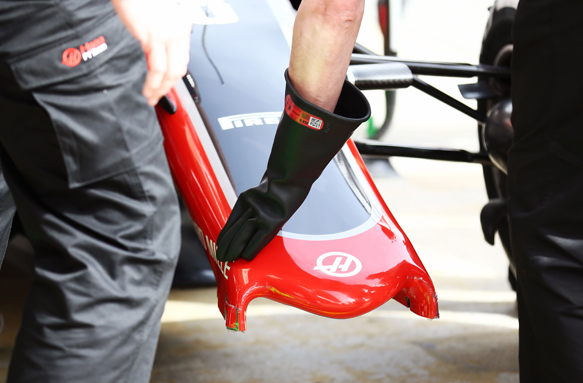
Front wing failure bought the day to an end
A solid, impressive debut for the American team running Ferrari parts. After only 34 laps on day one Romain Grosjean's front wing detached from the car and bought the day to an early end. Newman Haas bought his refreshing American motorsport openness to the issue with this insight:

"On the track, with the downforce and the vibrations, that bond [between materials} was not proper, it separated, and the aluminium just pulled out from the nose, which then let the wing go underneath the car, it ran over it and broke into many little pieces. So they took the two little down struts where the aluminium is, they put some straps around them, and then placed two screws perpendicular to the axis. Instead of having screws that are being pulled straight down, they are now perpendicular. That's the fix right now for that. Eventually we'll have to come up with some other way of bonding the aluminium to the carbon fibre."

Undeterred but this Mexican Esteban Gutierrez would complete 79 trouble free laps and end the day an impressive 6th on the time sheets.

Toro Rosso
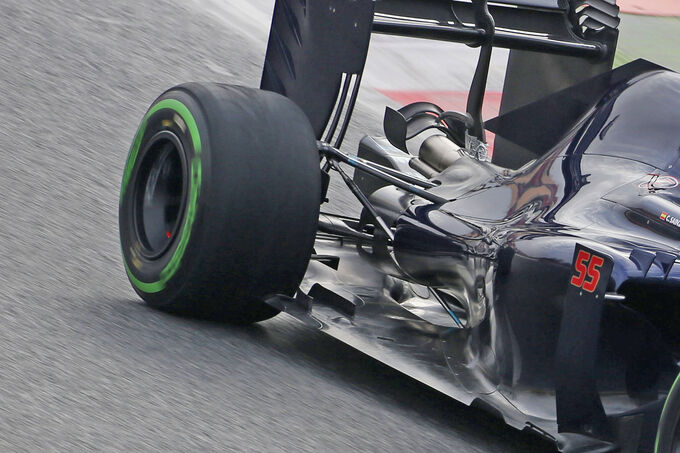
Those sidepods!
A switch from Renault to Ferrari power this year meant some late changes to design for the STR11, which debuted for the first time on Monday. In its solid dark blue paints scheme before its official launch next Monday the car was described by Sainz as suffering from 'many compromises'. Despite this the car featured an extremely skinny sidepod profile, possibly from enjoying the more longitudinal layout of the Ferrari power plant.. It is now understood that the team will run a 'B Spec' model after the official launch with considerable aerodynamic changes. One can view this week as a shakedown and attempt to integrate their power unit. A gearbox problem bought day one to a premature end after some steady pace. Vestappen stopped on track on day two, but was able to go on to complete a decent 121 laps.

Manor

The new MRT05 broke cover on Monday morning with young Mercedes protege Pascal Wehrlein ending the day 9th fastest . With a Mercedes power unit and Williams developed rear end the F1 minnows have big hopes for 2016. Wehrlein had to return to the pits after just 8 laps due to a late delivery of parts, but was back out to complete 54 laps. Day two ended with a respectable time of 1.25.925, just over 3 seconds off Vettel's best.

The MRT05 on track

Session Times

Monday

1. Sebastian Vettel Germany Ferrari-Ferrari 66 laps 1m 24.939s
2. Lewis Hamilton Britain Mercedes-Mercedes 137 laps 1m 25.409s
3. Daniel Ricciardo Australia Red Bull-TAG-Heuer 65 laps1m 26.044s
4. Valtteri Bottas Finland Williams-Mercedes 52 laps 1m 26.091s
5. Carlos Sainz Spain Toro Rosso-Ferrari 55 laps 1m 27.180s
7. Marcus Ericsson Sweden Sauber-Ferrari 71 laps 1m 27.555s
6. Jenson Button Britain McLaren-Honda 63 laps 1m 27.691s
8. Romain Grosjean France Haas-Ferrari 18 laps 1m 28.399s
9. Alfonso Celis Mexico Force India-Mercedes 38 laps 1m 29.406s
10. Pascal Wehrlein Germany Manor-Mercedes 30 laps 1m 29.591s
11. Jolyon Palmer Britain Renault-Renault 21 laps 1m 31.351s

Tuesday

1. Sebastian Vettel Germany Ferrari-Ferrari 126 laps 1m 22.810s
2. Daniel Ricciardo Australia Red Bull-TAG-Heuer 112 laps 1m 23.525s
3. Sergio Perez Mexico Force India-Mercedes 101 laps 1m 23.650s
4. Nico Rosberg Germany Mercedes-Mercedes 172 laps 1m 24.867s
5. Marcus Ericsson Sweden Sauber-Ferrari 108 laps 1m 25.237*
6. Esteban Gutierrez Mexico Haas-Ferrari 79 laps 1m 25.524s
7. Valtteri Bottas Finland Williams-Mercedes 134 laps 1m 25.648s
8. Pascal Wehrlein Germany MRT-Mercedes 71 laps 1m 25.925s
9. Fernando Alonso Spain McLaren-Honda 119 laps 1m 26.082s
10. Jolyon Palmer Britain Renault-Renault 42 laps 1m 26.189s
11. Max Verstappen Netherlands Toro Rosso-Ferrari 121 laps 1m 26.539s 


Monday, 22 February 2016

Mercedes W07 Unveiled


Although a few sneaky peaks were revealed from a 2 lap Silverstone test conducted on Friday, the first rendered images of the new car were published online yesterday. This morning the world press got to have a look themselves as the wraps came off the car in the Barcelona pit lane. Day 1 of testing lies ahead...

Wanting to evolve last year's highly successful W06 there are a few obvious visual changes. The most striking is the large airbox above the car. The central inlet will be feeding the engine's turbo compressor for combustion, but its the side inlets which are of interest. Mercedes has experimented with two separate inlets in previous years in a bid to provide extra cooling. It is likely that at least one of these provides additional cold air to the radiators and the ERS cooler, allowing the W07 to enjoy smaller sidepod openings than last year. Its also could be cooling the gearbox oil radiator. All the additional plumbing required for this big airbox means the engine cover is bit more bulbous.

That airbox!


A clear vanity panel sits in between the front axle behind the nose suggesting either easy access for mechanics or an 'S duct' system. The first shots of the car testing this morning don't seem to show and S duct outlet but the car likely has the facility for one - they tested this system at the end of last year.
This could be enjoying a renaissance among teams in 2016, speeding up air flow and increasing aerodynamic performance.

As stated previous the large airbox allows the sidepod openings to be smaller and feature a deep undercut to improve air flow to the important rear diffuser. There are a few notable details and 'slots'  cut into rear floor to direct air away from the turbulent rear wheels. As with every car revealed so far there are a pair of additional waste gate outlets either side of the main exhaust, this time located tightly together. This may help keep the turbulent gases from interfering with the rear wing.


As the car hits the track this morning we will keep you posted..

Sunday, 21 February 2016

Brief Analysis - 2016 Car Launches So Far

The season is fast approaching and sedate online car launches are hitting the headlines. Gone have the days of spice girls and crowds at swanky venues, today's F1 climate seems to only pay for computer enhanced backdrops and awkward pauses.

Ferrari SF-16H


Maurizio Arrivabene presented the 'SF-16H' in what looked like a dreary cold corner of a Maranello warehouse. A few fans with dodgy haircuts put questions to senior team members and drivers, at one point James Allison looking genuinely amused.

Someone should have turned the heating on
The car wore a quite revolutionary red and white livery, similar to that of their 1993 car. The feedback from fans online seemed positive but I think it looks a little too busy with amount of sponsor decals. It's V6 engine has half the cylinders of the 1993 challenger but considerably more power. As engines are the dominant factor in modern F1 Ferrari are keen to claw back the gap to the Mercedes teams. With 3 wins Ferrari were the only other team to win a race, and although confidently beating top rival Merc customer team Williams, they couldn't hold a torch up to Mercedes.

Fans with dodgy haircuts amused James Allison and Maurizio Arrivabene 


In an effort to increase power this years engine features two intercoolers placed in the path of cool air in the left sidepod and above the fuel tank, replacing just one in the tight confines between the banks of the engine. This not only allows better cooling of intake air and increased performance, but the freeing up of space allows the engine to feature variable inlet trumpets. This system also run by Mercedes offers more precise control of that cooler compressed air to mix with fuel and therefore increased efficiency. The MGU-K motor is now conventionally relocated to the left side of the engine instead of behind, allowing a thinner rear end and tight coke bottle shape. All this is quite a departure from the 2015 layout and the most revolutionary part of the new car.

Relocation of components thanks to Giorgio Piola


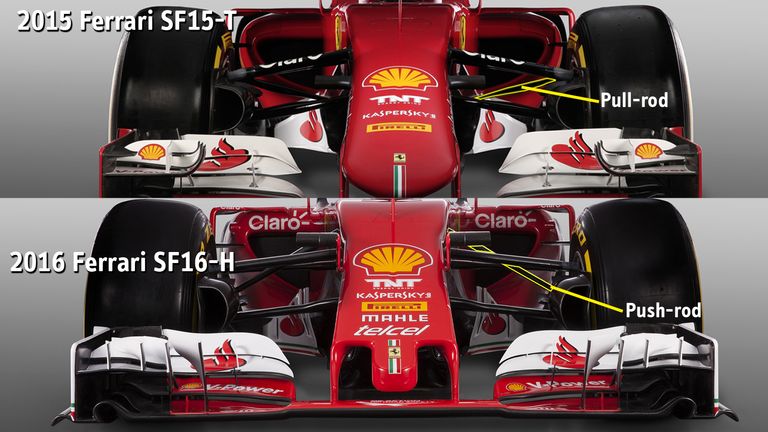
Another significant step is the reversion back to the conventional push-rod suspension set up at the front of the car. Ferrari have pioneered their 'pull-rod' system for the last four years which can potentially offer better aerodynamic performance at the cost of suspension quality. But abandoning this and making the front end more positive and drivable will favour both Vettel and Raikonnen especially. Both drivers enjoy planting the nose into a corner and rotating the rear around with the throttle.

What looks like a vanity panel sitting on top of the nose and in line with the front axle looks like it may be hiding an 'S Duct' system. Pioneered by Ferrari in 2008 this allows air from under the nose to be channelled to the top of the car, speeding airflow up in the process and increasing downforce. Mercedes tested their car with this concept at the end of 2015 and what looks like an outlet on the nose was taped over at their 'TV demonstation' this week at Silverstone.

All of this seems an ambitious effort to produce something revolutionary and take the fight to Mercedes. As testing starts tomorrow we may begin to get some indications if these key features are reliably working in unison together to produce a stellar package.

McLaren MP4-31


2015 was a hugely disappointing year for the Woking squad and their new Honda partnership. Specifying a challenging 'size zero' engine layout Honda failed to meet it with a competitive or reliable engine. Not even able to deploy enough harvested energy down a long straight the car was at a significant disadvantage. And that was while it was running.

Rumours in the Spanish press suggest that the Honda is significantly more powerful but lacking in reliability. Whether these are reliable in themselves time will tell. There is no bones about this being a hugely important season, with very vocal critic and star driver Fernando Alonso likely to jump ship if things continue down the same path.

Looking at the rear of the car the McLaren continues with its 'size zero' philosophy for its Honda power unit. While the Japanese are known for not turning back, a bigger turbine for this year's power unit should help solve turbo performance issues. The rest of the car is visually very similar to last year with conventional push rod suspension. The rear mounting points of the top wishbones have been moved lower and steering arm repositioned. This suggests a quest for further aero gains. The car retains an S Duct nose and a blown front axle as shared with the Ferrari. At the rear with its new for 2016 'waste gate exhausts' to improve sound, the central exhaust is intersected by the rear wing mount. This acts to stabilise the wake of hot exhaust gases exiting the engine.

All this tinkering will be in vain unless that power unit has turned a significant corner.

Renault RS16

The striking livery of the RS16


Is this the year were team Enstone escape the shadow of financial woes and lack of development under the new guise of Renault? With an all new driver line up and renewed relationship with French manufacturer its could be time to turn over a new leaf.

A striking black and yellow livery adorned the RS16. However technical director Nick Chester and managing director Cybil Abiteboul were quick to point out that this was simply a livery car and therefore not a representation reality. Therefore we will have to wait until testing to take notice of any potential innovations.

Red Bull Livery Launch

The matt red of the paint scheme will certainly offset Ricciardo's huge white teeth.


Red Bull went through the trouble of actually having an event in London, however it also wasn't really a car launch. Last years chassis was rolled out to display a new striking livery for next year. The strong matt colours have won me over but it won't make the car faster unfortunately. In limbo with an engine contract team principle Chistian Horner has already played down the teams chances this season, expecting a 'less competitive' first half. Using Renault engines re badged under their sponsor's name as 'Tag' the team has yet to confirm what engine will be in the back in 2017. After being hugely critical of Renault last year they may want to still coax this relationship back into fruition. But will Renault want their flag flied by this customer team or the works team?

The highly rated Ilmor engineering will be assisting Red Bull with engine development. However the statement from Christian Horner seems to indicate this development will be initially slow compared to Renault's own project.

Williams FW38

The Grove outfit unveiled its 2016 challenger on Friday through its social media channels. The car again looked similar to last year but with a few clear visual features. The sidepods and engine cover are reshaped suggesting new packaging demands for their Mercedes power plant.

Last year saw the team slip from second to third in the championship. Chief Technical Officer and Williams legend Pat Symonds was quick to explain this year's aim. "It is no secret that the low speed performance of the FW37 didn’t match its high speed performance so a lot of time was spent looking into why this was and subsequently making changes, which we hope will improve the situation."

As well as poor slow speed performance, last years car struggled in the rain. A revised front suspension set up suggests the team trying to combat this. Some details to the floor of the car, with some details around the leading edge and flicks around the rear wheels should help maximise air flow performance.

We look forward to the first test this week at Barcelona. Stay tuned!


Saturday, 6 February 2016

Talking Turbines - The Lotus 56B

Emerson Fittipaldi at Monza 1971

'Pratt and Whitney', two names synonomous with the world of aviation for producing engines. Yet in 1971 the cutting edge Lotus team married a such an engine to a Formula 1 car. The result was the gas turbined Lotus  56B, a radical approach to speed whose journey and development proved bitter sweet.

The 1949/50 'Rover Jet 1
If your unsure what a gas turbine is your probably not alone. Quite simply its an engine which uses the rush of high speed hot burning 'gas' to spin a turbine. The jet engine on a commercial airliner is a form of gas turbine. However rather than propelling itself with fast exiting gas known as 'thrust', a spinning turbine can rotate a shaft for drive. In this form your will find these packing a punch in helicopters and turbo prop aircraft. Some saw the potential of these relatively compact, lightweight and powerful engines to power a road car.

Rover had been experimenting with gas turbined cars, producing 'JET1' in 1949. After further development and prototypes they paired up with BRM to enter the Le Mans 24 hours in '63 and '65. A best place of 8th showed some promise and potential.

1965 Rover-BRM Le Mans entry

Across the pond American Ken Wallis approached motoring legend Carol Shelby, attempting to drum up interest and backing for a gas turbine racer. His idea was laughed off but he had better luck with Andy Granatelli of the STP oil corporation. With financial backing a car was to be produced for the great Indianapolis 500. The STP-Paxton Turbocar known as 'Silent Sam' would debut the gas turbine at Indianapolis. The metallic rumble of a piston engine was replaced with a jet like 'woosh'. Unusually the Pratt and Whitney ST6 engine was mounted side by side with the driver. It also featured four wheel drive, simplified by the fact the car didn't need a clutch or gearbox. At its debut at at the 1967 Indianapolis 500 the car took a commanding lead. With just eight laps remaining the car retired with a transmission bearing failure. Although not scoring points the car had demonstrated unmatched pace with its relatively compact and powerful power plant. The governing body feared dominance and wanted to reduce the performance advantages. For the following year air restrictor plates were to be fitted to gas tubine entries.

Like Father Like Son: Damon Hill driving his Dad's 59
The 'Silent Sam' with its side by side engine layout

The potential was recognised by Colin Chapman's legendary Team Lotus, a team always pushing the boundaries of engineering technology. Impressed with the British outfit's proven track record the STP oil corporation duly supplied sponsorship money. Andy Granatelli worked alongside Colin Chapman and Lotus designer Maurice Philippe to produce a contender. The same Pratt and Whitney ST6 engines were supplied with some small modifications. With Team Lotus' creative chassis design and resources the result was a much more sophisticated effort than 'Silent Sam'. It featured a low slung nose to give the car an aerodynamic 'wedge' shape. Coupled with the Lotus ethos of keeping overall weight to an absolute minimum the design clawed back the lost ground from the air restrictor plate.

Graham Hill at the 'Brick Yard', aka Indianapolis

Entering the 1968 Indianapolis 500 with four cars the project was to star the phenomenal talent of Jim Clark. The double Formula 1 World Champion had already won the famous race in 1965 and was teamed with the equally successful Graham Hill. Sadly Clark was killed in a Formula 2 race at Hockenheim that year and was replaced by Mike Spence. The tragedy was to be further compounded before the race began. The car proved competitive in practice when Spence set the fastest average speed of 169.55 mph. However when misjudging the entry to the first corner his car smashed into the unforgiving concrete wall. The right front wheel entered the cockpit and left the 31 year old with fatal head injuries. The three remaining cars of Graham Hill, Joe Leonard and Art Pollard entered the race. Pollard was the last team car remaining and with a few laps to go narrowly missed out on victory, retiring from the lead with fuel pump failure. The 'Silent Sam' STP-Paxton entry had missed the grid after a previous crash in qualifying. It seemed only a matter of time before a gas turbine powered car was going to take victory at Indy. Unfortunately a new raft of rules from the governing body would make this form of propulsion uncompetitive.

Fittipaldi in the 56B
Colin Chapman had intended the 56 to also compete in Formula One, and Lotus developed the modified 56B. The gas turbine produced approximately 600hp, which was around 175 hp more than its piston engined rivals. Once the turbine reached optimal rotation the acceleration was unmatched. Furthermore no gearbox was required or a bulky cooling system. The engine had less moving parts which made it potentially more reliable. Four wheel drive grip made the car superior in wet weather. However there were significant disadvantages. Primarily the gas turbine was very thirsty, with the stop start nature of a Grand Prix racing requiring extra fuel capacity. Heavy tanks stored 280 litres in the sidepods. The gas turbine engine also suffered from hugely unresponsive lag. Forget your primitive turbo cars of the 80's, here waiting three seconds for the power after hitting the throttle was quite normal. Engine braking was non existent and the throttle was also unresponsive when backing off, pushing the car further into the corner. A hefty inboard braking system was required to handle the extra requirements. Suddenly what seemed minor hurdles at Indianapolis were becoming big obstacles to the 1971 Formula One campaign.

The car debuted at the non-championship Race of Champions at Brands Hatch that March. Emerson Fittipaldi qualified 7th but retired with suspension failure. The same problem plagued the car at the next two non-championship meetings, but Fittipaldi managed 3rd place in the final heat. What was becoming apparent was the four wheel drive made the 56B untouchable in wet conditions. However in the dry this system would have produced undesirable understeer making driving this strange car even more of a challenge. According to Fittipaldi it was "very difficult to drive. Very very difficult. We knew we would have to do a lot of development on that car to make it competitive, but it never gave good results."

The Pratt and Whitney ST6 in the back of the 56B, Monza
Dave Walker almost look set to take victory at the Dutch Grand Prix at Zandvoort. Utilising the superior grip of 4 wheel drive in the wet, he carved his way through the field only to spin out. Another retirement followed at the hands of Reine Wisell at the British Grand Prix, this time with mechanical issues. The Lotus 56B's final championship outing at Monza with Emerson Fittipaldi scored a mediocre 8th. At the front Peter Gethin, Ronnie Peterson and François Cevert enjoyed the closest finish in Formula 1 history. A lap down Fittipaldi tried desperately to hussle the over weight and understeering 56B towards a good result but the hot weather hindered the performance of the gas turbine engine. The season ended with no wins even though the conventionally powered Lotus 72 was still being used that season. With resources being poured into the gas turbine car the team feared its proven Lotus 72 was becoming neglected. Coupled with Emerson Fittipaldi's lack if patience with the project, the 56B was shelved at the end of the year. The car was entered that year for one last race, an F5000 event at Hockenheim where Fittipaldi placed an impressive 2nd. The following year the Lotus 72 would go on to win the Formula 1 World Championship. The gas turbine wouldn't be pursued in Formula 1 again. This was overshadowed by a certain paranoia that any expensive development road would be pointless if the technology was outlawed. The sole Lotus 56B in existence has been restored and remains under the ownership of Team Lotus [below].

                   "I think this was a blind alley because if we had eventually become successful with it, it would promptly have been banned and then a great deal of money would have been wasted. It happened before at Indy, where the four-wheel drive turbine cars were banned as soon as they started to be successful. Unfortunately the innovator in motor racing is often penalised the moment he produces something of benefit to himself and which makes his cars go faster than those of other competitors. If I could have been sure of at least two year's stability, I would have carried on with developing it, because the turbine is a very good converter of torque. What was wrong with it in Grand is that we ran it with four-wheel drive. If we had built a two-wheel-drive turbine I think that with its smoothness, its very high torque at low rpm and the power it was capable of producing under the formula equivalence, it woukd have been very competitive." -Colin Chapman, Team Lotus

The sole remaining Lotus 56B at Autosport International 2016


Sunday, 19 July 2015

Back to the Future – How Ground Effect could save modern F1

Sometimes the answers can come from the past..


What should an F1 car be? Ask most fans and they would tell you the fastest circuit race cars on the planet. They should have a degree of difficulty to drive that allows talent to shine through. They must have a purity in design and driving experience that reflects the pinnacle of motorsport. The racing spectacle should be as entertaining as possible whilst the sport being at the forefront of technology to keep the manufacturers involved.  This balancing act and ideal vision of the sport has become somewhat eroded. Yet look into the sports past and you will find a technology that could re address this balance and bring the spark back the audiences are currently longing.

Still tail happy at low speed
What are the modern turbo F1 cars like to drive? Certainly they are not the turbo charged monsters we saw in the 1980s era. Many including me fantasised of ridiculously powerful cars squirming sideways and forcing the drivers to wrestle them into submission. Even with recent rules restricting downforce, modern cars have so much more grip than their 1980s counterparts. They feel glued to the road and more refined compared to rocket propelled shopping trolleys. At slow speed the back end will still squirm under the huge torque of the turbo engine breaking traction. But throw the car into a bend at speed and the front wing and complex rear diffuser will produce a huge amount of downforce making the car feel stable and planted.  That’s right, modern F1 although recently dominated by engines is still all about downforce.   Back in the 1980s teams were dominated by engineers, today the design teams are guided by aerodynamicists. HNDs have made way for Aeronautical degrees as reluctant poster boy Adrian Newey proved with success that every aspect of the car should be optimised for aero efficiency.  Now aerodynamicists lead the design direction of the car.

Complex modern front wings
There is one single component on an F1 car that generates around a third of this downforce. It is the front wing. By means of hugely complex winglets and end plates these wings also play a vital role in channelling air around the disruptive tyres and under the car. As rule changes evolved this component has become the holy grail of car design. You might find your F1 nerd trying to impress by attempting to explain the latest wing upgrade that he has read in Scarb's blog or Autosport magazine. The truth is such is the complexity you truly need an Aeronautical degree to really understand the design direction of front wings. Teams plough millions into developing them which individually cost alone around £100,000. Think of this when Maldonado love taps his next opponent and comes into the pits for a new one.

'Dirty Air' phenomenon
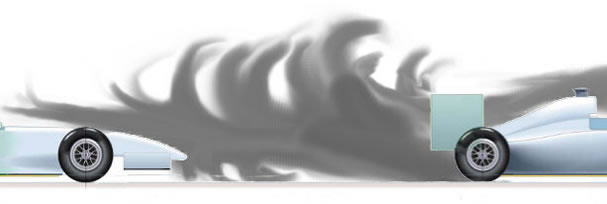
The serious problem with this hugely complex piece of carbon fibre is overtaking. When chasing another driver you may hear a radio transmission complaint about ‘dirty air’ or losing time tucked up behind an opponent. Once a following car gets close behind a car in front it enjoys the advantage of a hole in the air being punched open. This is great down the straights as the hole generated by the opponent allows it to ‘slipstream’ behind and gain an advantage from less drag. However, approach a corner under braking and enter a bend and this lack of air doesn’t allow the front wing to work. The air flow it does receive has already been shaped and manipulated by the car in front so doesn’t flow as it should. This ‘dirty air’ reduces front end grip and produces understeer, meaning the car doesn’t want to turn into the corner. Continue to try and close the gap and overtake and this understeer produces unnecessary front tyre wear and can rapidly snowball during a race when tyre wear is all important. Cue drivers backing off and saving their tyres and accepting the position they are in. This is caustic to racing and a sad reality of modern F1. The slow reacting FIA are aware of this and have tried to band aid the racing with DRS zones to artificially boost the chasing driver. In 2009 ‘tea tray’ style wide front wings were bought in to channel air around the outside of the front tyres thus attempting to make the front wings less sensitive to dirty air. Although we saw plenty of overtaking in the following years this was down to new high-degradation Pirelli tyre compounds and the introduction of DRS. The front wings were still very sensitive to dirty air and increasing their size had only increased cornering speed. They were soon shortened in 2014.


Ground effect 'Venturi' tunnels
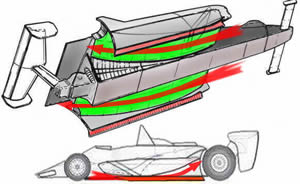
If you asked an alien to design a fast single seater racer using earth’s technology, would it have a large and highly important, expensive and complex front wing? No and far from it. To find the most natural, simple way of a car producing high amounts of downforce with as little cost and drag as possible you have to go back in time to 1977. Legendary Lotus founder Colin Chapman had been studying aerodynamics at the British jet fighter manufacturer De Havilland. Aerodynamics had already come to importance over 10 years ago when ‘wings’ appeared on racing cars. Wings are in fact upside down aircraft wings. Instead of producing lift the wing produces downforce, pushing the car into the ground and producing grip and speed. Colin was further inspired by fluid dynamics and how they worked on De Havilland’s ‘Mosquito’ fighter aircraft. He came to realise that the underside of the car could be profiled into a curve, similar to a wing face. Plastic brushes and later rubber around the edge of the cars floor created ‘skirts’ which stopped air interfering with this large area of low pressure. The ‘Venturi’ affect as it is called would basically turn the entire car into a wing, sucking it to the ground. His ideas were relayed back to his designers Peter Wright, Martin Ogilve, Tony Rudd and Ralph Bellamy. Penned as the ‘Lotus 78’, a new car was born out of these ideas and principles. The front wing was small and skinny and all that was required to address balance and allow the underside of the car to work optimally.  Sculptured after many hours in Imperial College London’s wind tunnel, the result was in my eyes the most beautiful car to ever grace a racing circuit. 
    
The Lotus 79 changed motorsport forever
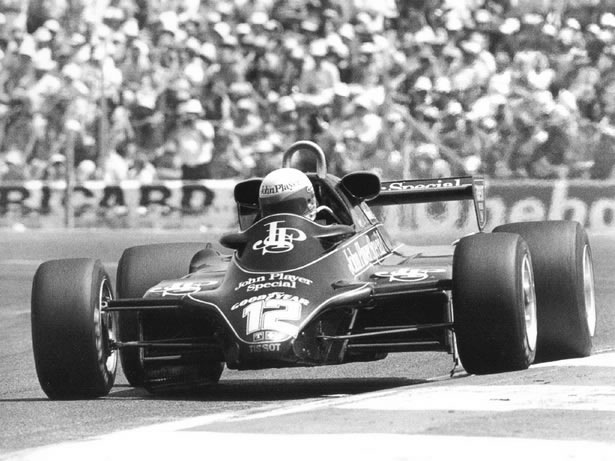
Introduced for the Argentinian Grand Prix in 1977 the benefits were obvious and the cornering speeds were phenomenal. Unfortunately the grip was being generated so far forward in the car that a huge rear wing was required to keep the back end in check. This meant the car suffered on the straights with drag. This coupled with an underpowered and over worked Cosworth DFV it wasn’t enough to top the season and the team finished the constructors championship 2nd. Efforts went into reducing the rear wing size and tendency to oversteer for the new much more rounded '79'. That went on to win 9 of the 15 races and won the World Championship with Mario Andretti.  A successful year was marred by the death of the talented team mate Ronnie Peterson, succumbing to injuries sustained from an off-line pile up at the Italian Grand Prix. It would prove to be Team Lotus’ last World Championship and it wasn’t long until the rest of the field cottoned onto the advantages of ground effect. However many teams did not have the budget for wind tunnel testing and the results were crude applications often with undesirable side effects. Disturbances in the airflow under the car would cause cars to ‘porpoise’ or rock back and forth. This could often be violent and was particularly uncomfortable for the driver as the cars had to be run on rock hard suspension to maximise efficiency. At times the cars could lose their ground effect and grip in an instant with scary results.

 ‘To be honest, there was no such thing as cornering technique in the ground effect era.  “Cornering” was a euphemism for rape practised on the driver. . . When you came into a corner you had to hit the accelerator as hard as you possibly could, build up speed as quickly as possible and, when things became unstuck, bite the bullet and give it even more. In a ground effect car, reaching the limit was synonymous with spinning out.’ – Niki Lauda

1982 proved a dangerous season
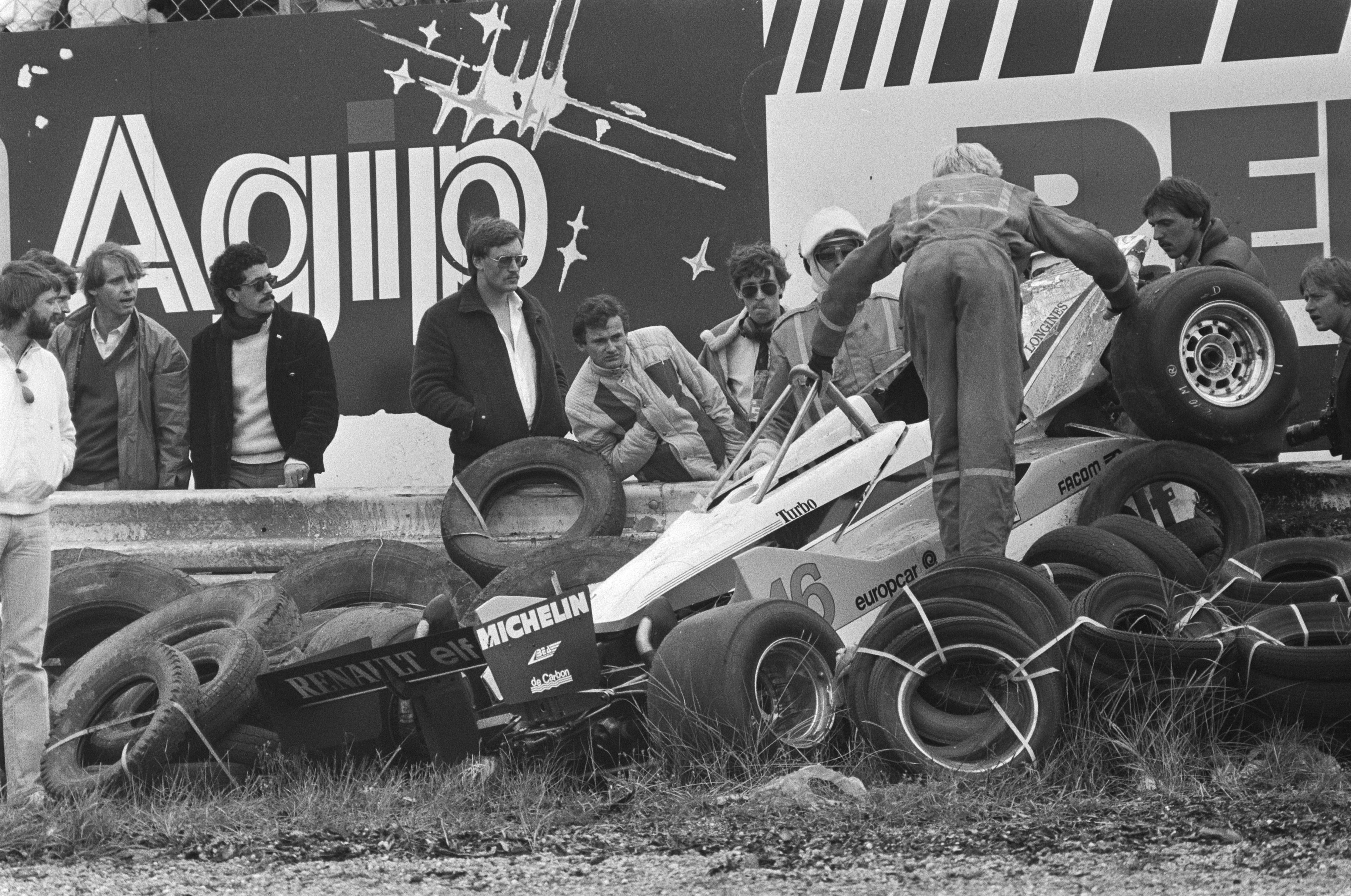
FISA were worried with cornering speeds and teams experimenting with ground effect with very little aerodynamic knowledge. Skirts could break sending cars off the track at high speeds. Patrick Depailler was killed testing for the German Grand Prix in 1980. While the accident was blamed on suspension failure and poor guard rails the car was travelling at significant velocity at the high speed Ostkurve, thanks to ground effect. The following year skirts were banned by FISA but teams had other ideas such was the advantage. Skirts that dropped out on circuit but retracted to hide from scrutineering were developed and FISA lifted the ban in 1982. Cars continued to have accidents at very high speeds with legend Gilles Villeneuve losing his life at Zolder in Belgium. Although not the cause of Villeneuve’s death, again the high speed of the cars played a factor. Turbo engines were beginning to appear in F1 and were looking to make a scary combination. Villeneuve’s team mate Didier Pironi suffered a horrific crash at the German Grand Prix were the ground effect of the cars in front had thrown up a fog like mist from the wet race track. Unsighted Pironi smashed into the back of Alain Prost’s Renault severely injuring his legs, surviving but ending his career. Across the pond Gordon Smiley lost his life in an horrific high speed accident in his ground effect car at the Indy 500. FISA had enough and made a flat under tray under cars which effectively banned ground effect from Formula One. While it continued 

Today in principle we still have ground effect but at a very restricted level, with the diffuser at the rear of the car. Bring back unrestricted ground effect with today’s understanding of aerodymanics would result in the drivers having to wear G suits – the cornering speeds would be ridiculous and highly dangerous. However remove the complex over body aerodynamics and the over reliance on the front wing and you have the potential for some great racing. Limitations, be it on tyre compound and some clever restrictions on the ground affect area would bring the cornering speeds down to acceptable levels. This wouldn’t be the highly explosive twitchy cars of old. Ground effect can now be applied with modern safety standards. The band aid of DRS would be redundant and even road cars would benefit from the most efficient way of producing grip in this age of efficiency.

Now it looks like the F1 circus is starting to see sense, with proposals for ground affect for 2017 up for discussion by the Strategy Group.  Jenson Button supports the notion, “if you’re going to work with downforce it should come from the floor rather than the wings, because you can race closer and fight, and you don’t have as much dirty air from the wings for the car following,”   


Let’s hope the proposal makes some serious inroads. In 2012 the idea of ground affect was thrown out the window with teams stating their worry over costs. The reality was the dominant and powerful teams in the sport at the time, namely Redbull and Ferrari, didn’t want the pecking order shaken up by a fundamental redesign. You can be ensured after this initial investment the costs of development would be slashed ­­­­. Bring it back I say…

Elio De Angelis at the French Grand Prix 1982

R.I.P Jules Bianchi


R.I.P Jules Bianchi 1989-2015. Such as tragic end to a young life and talent.

Sunday, 14 June 2015

Motorsport Justice at Le Mans - Hulkenberg, Tandy and Bamber bring Porsche victory


The #19 and #18 Porsche cross the line

The motorsport Gods cast light at Le Mans this weekend. A trio of drivers who hadn't been gifted with the opportunities or money of their compatriots shared the seat of the winning Porsche 919, bringing the manufacturer its first top class win in 17 years. Nico Hulkenberg, who many believe has never had a car in F1 capable of delivering the results his skills deserve, took the chequered flag to a sell out crowd at le circuit de la Sarthe . But if it wasn't for the stellar performance of British driver Nick Tandy and kiwi Earl Bamber this record wouldn't have been possible.

Porsche's first win in 17 years
The win granted Nick Tandy the honour of the first British winner at Le Mans since 2003. Nick began his climb to the top of motorsport by following his older brother's Joe route into the unconventional working-class world of Mini Stox racing. Both himself and Joe enjoyed success winning National and regional races and titles. Progressing onto Formula Ford Nick's talent was further recognised, but more often than not a lack of money bought performance handicaps. To his aid his brother Joe with a fresh engineering degree formed 'Joe Tandy Racing' and produced competitive cars for his brother in Formula Ford and F3. Unfortunately the good times were about to come crashing down when Joe driving a BMW 5 series collided with a van at a junction in Bedfordshire. It proved fatal for both himself and his to-be brother in law in the passenger seat. Nick vowed to continue on and 18 days after the incident scored the team's first win in F3 with a dominant performance at Rockingham. An opportunity to race in the German Porsche Carrera Cup lured him to sports cars, scoring 2nd place in his first race with no testing experience. Success followed and in 2013 he was signed to the Porsche factory team. His performances and loyalty to the Porsche family won him his drive this year in the third Porsche 919 Le Mans racer.

Nick Tandy began his racing in MiniStox
Of course many of you will be aware of the predicament of F1 racer Nico Hulkenberg. Highly rated by many in the sport, Nico lost his opportunity for a top team contract to Kimi Raikonnen for the 2014 season. His lap times in comparison to team mates speak for themselves, but Ferrari favoured their previous World Champion Kimi. For me and many that was not a wise decision. On his good days the popular bad boy of F1 Kimi has amazing talent, but since getting battered by his team mate Massa in 2008 has become a bit of a spent force. To Ferrari however a driver consistently able to challenge their lead man Vettel wouldn't be welcome.

Nico continues to campaign on in F1 driving the inferior machinery that is the Force India. Although this huge Le Mans win will further raise his stock value in the sport, could it entice him to race in sports cars full time? With Formula One being slagged off left right and center on social media with Mercedes domination, quiet engines and boring races of recent a factory drive with Porsche seems tempting.
Will 'Hulk' be tempted out of F1?
An exciting Le Mans this year has only raised the World Endurance Championship's profile and that unbeatable winning feeling might have stirred something inside Hulkenberg. No one wants to spend their years racing mid field machinery in F1 so could this be a tipping point?

And lets not forget the third driver of the winning car, New Zealand's young Earl Bamber. Coming through the ranks of the expensive world of single seater racing on a tight budget, the kiwi took the same decision as Tandy to move to the comparatively cheaper world of sports car racing. Winning the Porsche Carrera Cup Asia in his first season in 2013 proved his credentials and another year of Porsche racing followed. Signed up as a works factory driver for Porsche this year at the age of 24, he was gifted given the opportunity to race at Le Mans this year with Hulkenberg and Tandy in the #19 Porche 919. His good friend and fellow New Zealander Brendon Hartley drove the lead Porsche 919 #17 car this year with Mark Webber and Timo Bernhard.

Sun rises at Le Mans
At what of Mark Webber, the man favoured to lead Porsche to victory this weekend at Le Mans? During the evening young kiwi Brendon Hartley made the a mistake of not slowing down enough under double yellows in the new 'slow zone' and so the #17 Porsche was penalised with a one minute penalty. This was left for Webber to serve after jumping into the seat shortly after. This took the car out of the race and some very quick laps by Nick Tandy in the #19 Porsche bought his car into contention. The chasing #7 Audi lost its bodywork requiring pit repairs and the only other threat from the team's #9 car ended when a front driveshaft required changing. Earlier in the race Loic Duval's #8 Audi had also suffered bodywork damage when clashing with battling GT cars on the circuit, costing 2 minutes and bringing it out of the battle at the front. This would be the first time the German marque had lost Le Mans since 2009, after a dominating run of 12 wins in the last 15 races.

The polesitter and third Porsche dropped down the order when Neil Jani and Romain Dumas both had a copycat lock ups bringing them off the track at the end of the long Mulsanne straight. Last year's World Endurance Champions Toyota continued to struggle with a lack of pace and were not in the same league as the Porsche and Audi cars all weekend. The best placing Toyota was the #2 of Alex Wurz, Mike Conway and Stephan Sarrazin who were able to salvage a 6th place out of Audi's issues.

Nissan struggled with its radical concept
Nissan's radical GT-R Nismo's race was already played down as a test session rather than a challenge for glory this weekend, with the cars regularly visiting the garage to keep them going. The front wheel drive car struggled with traction out of the corners and a scary moment ensued for Exeter boy Harry Tincknell - loosing his front bodywork and lights in the darkness of night. It was the only car to cross the chequered flag, be it unclassified for being too far back.

In other classes the KCMG Oreca of Nicolas Lapierre, Richard Bradley and Matt Howson led a convincing victory in LMP2 after stopping on track at one point with reliability issues. The GT class was won by the loud roaring Chevrolet Corvette of Oliver Gavin, Tommy Milner and Jordan Taylor. Towards the end the Ferrari 458 Italia of Gianmaria Bruni took the lead only to drop to third after a heroic gearbox repair, with Italian mechanics pulling out and replacing individual gears in 45 minutes.

A historic Le Mans 24 Hours certainly bought a refreshing taste to motorsport after a few less than exciting Grand Prix races in recent months.